 CLOCKER
Timed like the Olympics. Because to them, it is.
Just the iPhone in your hand. No hardware, no setup. Clocker films at 240 frames a second, starts the clock on the wave of your hand, and reads the finish from the frames themselves, not from a thumb on a stopwatch. An answer worth trusting when they sprint back and ask.
See how it works Coming soon to the App Store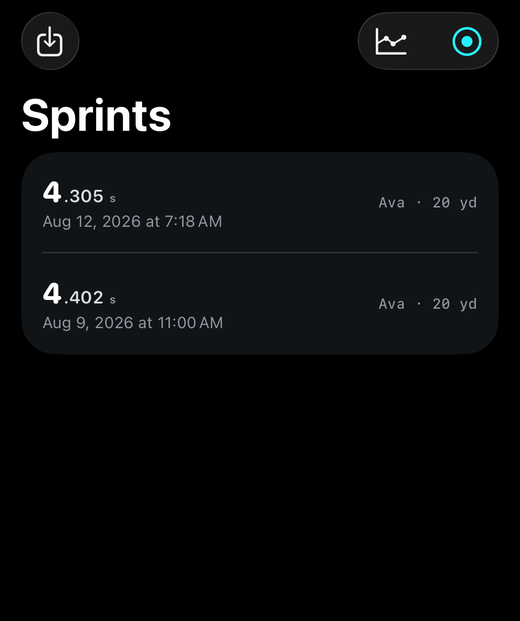
Pick a finish line
A chalk line, a crack, a cone. Point the phone at it and Clocker locks on - it tracks the line in the world, not on the screen, so just holding the phone works.
Cover the lens
Your hand over the camera is the starting gun. Sweep it away, and the clock starts on that exact frame. Your hand is the signal they watch.
Read the number
Hit stop once they are through, and Clocker reads the recording frame by frame, all 240 per second. Moments later the time is on screen and spoken out loud, with the proof strips to back it up.
Every time comes with its proof.
A stopwatch gives you a number and asks for faith. Clocker shows you the frame before, the frame on the line, and the frame after, spaced so your eye can see the motion. Disagree? Pick the exact frame yourself, it takes a couple of taps. Your call is the record.
The same measurement, every single rep.
A stopwatch time depends on whose thumb is on it. Clocker reads every rep the same way: the same frames, the same rule, whoever is holding the phone. That is what makes a trend worth keeping. When this Saturday beats last Saturday, the difference is the runner, not the timing.
same method · every rep · every runner · all season
PBs, trends, and the season, per kid, per distance.
Tag the runner and the distance before the rep. Clocker keeps the history, draws the trend, and stamps PB on a new best, results-sheet style. No confetti. The celebration is the kid sprinting back to ask what they got.
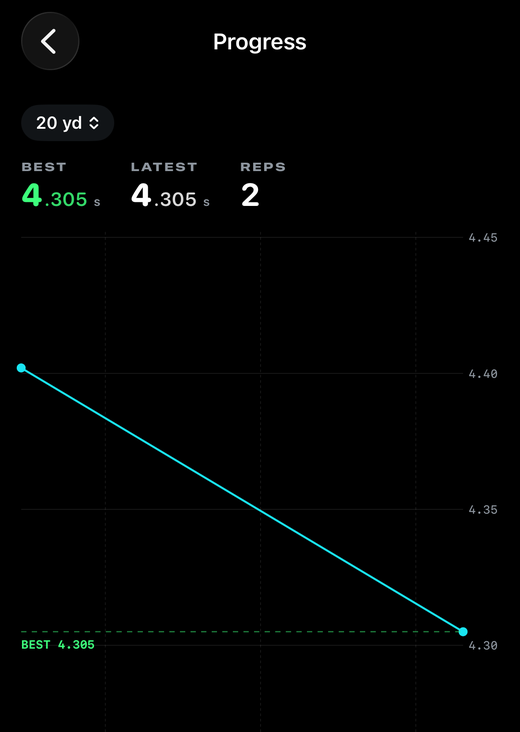
Photo-finish timing for backyard races.
240 fps capture with locked exposure. Frame-drop detection that tells you when a time is uncertain, and stays quiet when it isn't. A finish read from the recording itself, never from a reflex. Every mark keeps the frames that produced it. That seriousness is the gift: a backyard dash, treated like a world record attempt.
The things parents ask.
Do I need any equipment?
No. One iPhone, held in your hand. No gates, no tripods, no beacons, nothing to charge or forget.
Which iPhones work?
Any iPhone that records 240 frames a second slo-mo and runs iOS 17 or later. That covers most iPhones from the last several years.
How accurate is it?
The recording captures a frame every 0.004 seconds, and the time is read from those frames, not from anyone's reflexes. Every time comes with its proof pictures, and if you ever disagree with a mark, you can set the exact frame yourself. Your call is the record.
Where do the videos of my kid go?
Nowhere. Everything stays on your phone. No account, no upload, no cloud. Sharing a time is your choice, from your phone, like any photo.
What will it cost?
Free to download, with a daily allowance of auto-timed reps. A yearly pass unlocks the whole season: unlimited reps, every runner, every distance.